
 US
US UK
UK CH
CH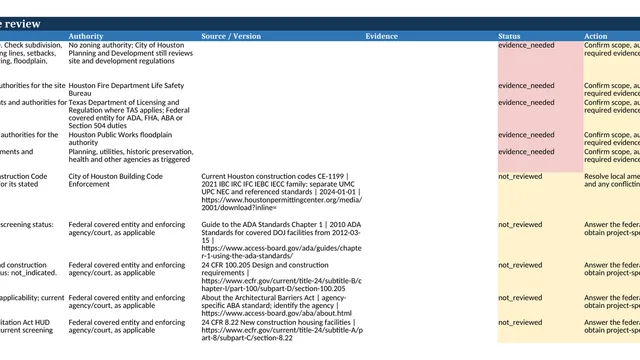
AI agent at work · Bid leveling / United States
The lowest bid left out $22,000 of millwork.
The cheapest submitted bid was not the cheapest after scope adjustments. ArchX made the differences visible in an editable comparison and owner memo.
What changed when the scope was checked
| Contractor | Submitted | Review subtotal |
|---|---|---|
| Lone StarLowest submitted | $284,600 | $313,100 |
| +$22,000 millwork + $6,500 provisional permit fees | ||
| Barton Creek | $289,850 | $295,350+ unpriced piping |
| -$1,000 arithmetic + $6,500 provisional permit fees | ||
| Pecan Street | $306,500 | $306,400 |
| Arithmetic adjusted; piping scope needs confirmation | ||
Priced scope only. These are provisional review figures, not revised offers or complete award prices. All three bids still need clarification; Alternate 1 is separate.
Open the seven-sheet comparison ↓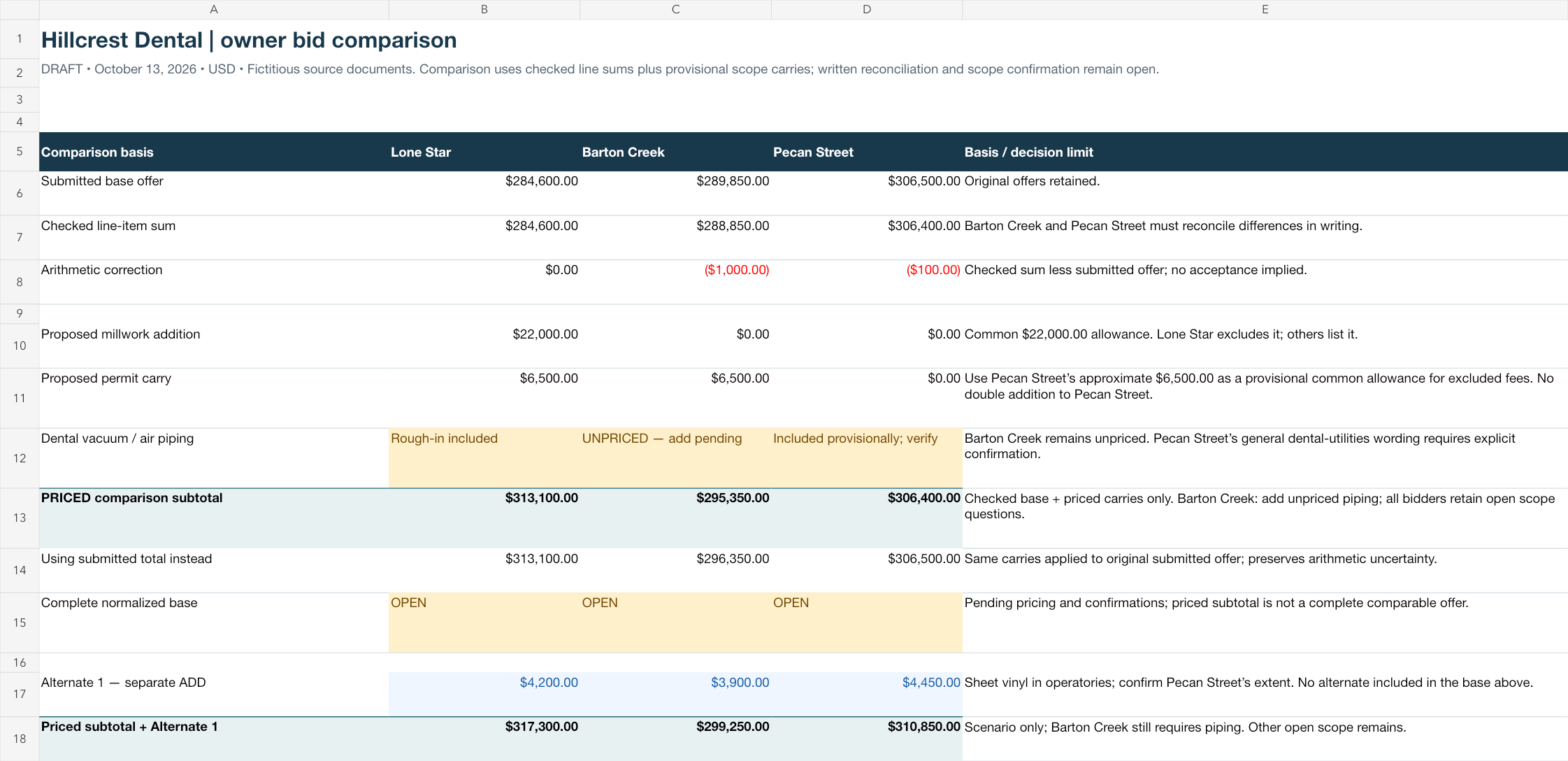
Follow one finding to its source
The exclusion becomes a question to resolve.
Open the bidder’s file, then follow the same issue into ArchX’s editable questions sheet.
In ArchX’s output
Obtain an inclusive net add for all excluded dental vacuum and compressed air piping. If retained by the owner's dental vendor, provide a coordinated scope and vendor quote identifying testing and connections. Confirm whether this affects your plumbing line or duration.Comparison workbook · Bidder Questions!D19 ↓
What you can do with it
ArchX did more than compare totals: it connected the bidder qualifications to the estimate and produced the questions needed for an owner decision.
The deliverable
Open what ArchX produced.
Original files from this run. No sign-up.
All four inputs were marked fictitious. Scope carries are provisional and arithmetic corrections require written reconciliation; the workbook makes those conditions explicit.
The starting point
What ArchX received.
Read the original request and file list
The request
Bids are in for Hillcrest Dental (TI in Austin). Three GC bids are in Bids/, our DD estimate is in Estimate/. Level the bids for the owner: check each bid's arithmetic, normalize scope (millwork allowance, dental vacuum/air piping, permit fees), carry Alternate 1 separately, and compare against our estimate including the contingency we use at DD. Flag every exclusion and qualification and give me the questions we should send each bidder before the owner decides. Spreadsheet plus a short summary memo I can edit.
The project files
- Bid - Lone Star Builders.pdf
- Bid - Barton Creek Construction.xlsx
- Bid - Pecan Street Contracting.pdf
- Architect estimate DD.xlsx
Try it on a job you know
Give it the task.
Then keep going.
Describe the work in your own words. Start with a project you know, inspect the result and ask for the next change in the same conversation.
Bring these files
Three GC bids and your estimate from one completed project.
What to check
Use a scope gap you already know. Can you find its source, follow it into the comparison and use the resulting bidder question?
Before using client files, review how ArchX handles project data.
What could you ask next?
A suggested follow-up, once you have reviewed the result and added the new files:
The bidders have answered our questions. Update the comparison from their written replies, retain the original offers and revise the owner memo.
Download for Mac or Windows, connect your ChatGPT account or API key, then give ArchX this request with your files. AI usage runs through your connected account. Pricing and account requirements.